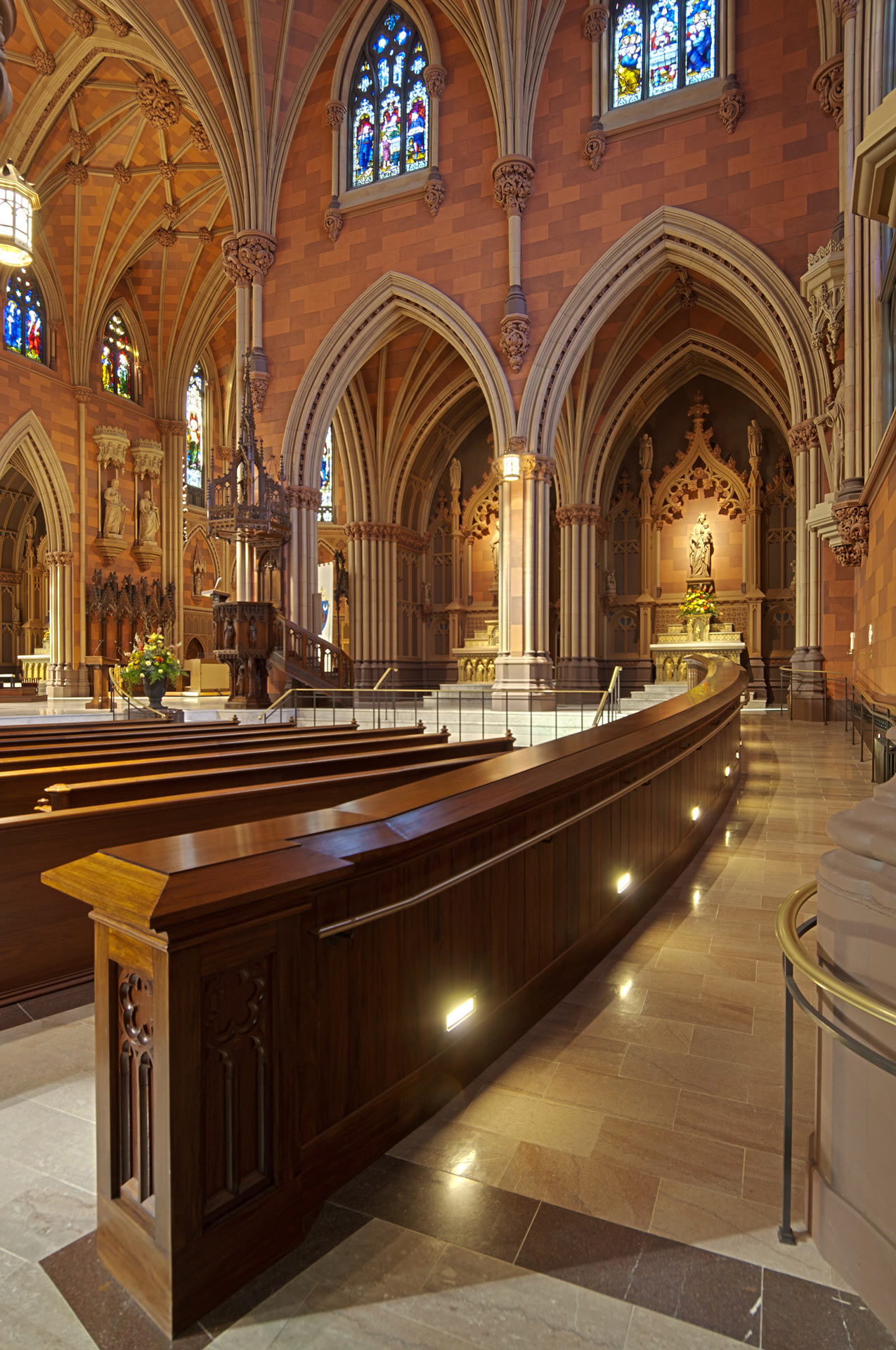
Cathedral of the Immaculate Conception: Interior Restoration

Period

1848 – 1892

Location

Albany, New York

Notables

National Register of Historic Places

PROJECT OVERVIEW

Phase II of the restoration focused on the comprehensive renewal of the Cathedral’s interior. The planning and design process prioritized the directives of the Second Vatican Council, ensuring the space met contemporary liturgical needs while preserving its historical significance. 

RESEARCH & DOCUMENATION

A broader assessment of the building’s interior fabric was conducted alongside the development of new HVAC and electrical systems in collaboration with Quantum Engineering P.C. Inc. Areas of plaster deterioration were extensively surveyed and paint samples were analyzed to identify the accurate color palette from the 1890s.

Photo Credits: Randall Perry

DESIGN

The firm collaborated closely with liturgical consultants and the restoration committee to shape the design. To better meet contemporary liturgical needs, the pews were rearranged and reconfigured for improved comfort and accessibility. A new steel and concrete altar platform was also designed and constructed at the crossing, extending the altar further into the worship space and enhancing the congregation’s connection to the service. 

Original floor plan

New floor plan

REALIZATION

In addition to the pews and altar, the radiator heating system was insulated and repaired, the attic was insulated for increased energy efficiency, and the electrical and lighting systems were completely replaced.  The existing Rambusch lighting sconces were refurbished and reinstalled. Handicap accessibility to the altar level was achieved with a new ramp which was faced using leftover original pew ends. Entry vestibules and toilet rooms were completely reconstructed.  
The existing plaster was repaired where possible and replaced in-kind where not.  Removal of deteriorated plaster revealed numerous areas of damaged ceiling framing which required repair.  A new decorative paint scheme was implemented that utilized a glazing technique to emulate an ashlar stone appearance. This scheme dates to what existed at the time the apse and side altars were added to the building in the 1890’s. 

Photo Credits: Randall Perry

Photo Credits: Randall Perry

Photo Credits: Randall Perry

Every project tells a story—crafted with care, shaped by history, and built to inspire for generations.

ALBANY

388 Broadway, Albany, New York 12207

WILLIAMSBURG

402 W Duke of Gloucester Street, Suite 240
Williamsburg, Virginia 23185

CONTACT

518.433.9394
info@mcwb-arch.com